
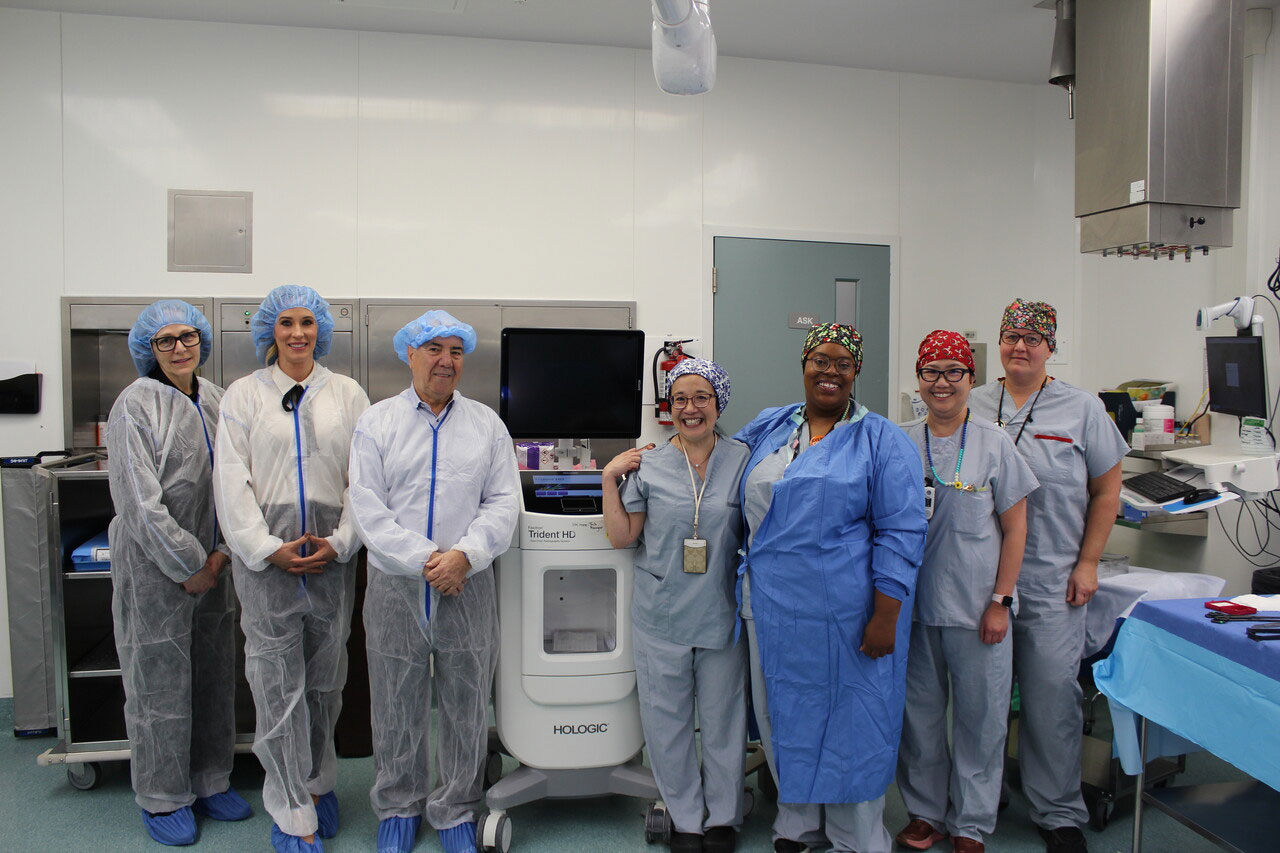
From Support Streams such as Community Infrastructure to Public Health & Wellbeing, the AGAT Foundation champions important causes in Alberta and beyond. When John DeSanti, our founder and director met Dr. Jeanie Kanashiro, it was only the beginning of a friendship that would extend into a professional relationship with the support of the AGAT Foundation.
WHAT CAN WE IMPROVE IN BREAST CANCER SURGERY AND PROCEDURES?
For a number of years, breast cancer treatments and technology have come a long way. But hospitals and operating rooms still need support to implement such technology to improve overall procedures for women diagnosed with breast cancer.
“Every three to six months, we have novel, rapidly advancing technology being introduced around the world,” said Dr. Jeanie Kanashiro at a talk on breast cancer treatment at AGAT Laboratories in Calgary.
Dr. Kanashiro is long-time surgeon at the Peter Lougheed Hospital. And for some years now, she has shared her desire to improve what’s often a painful, stressful and intrusive experience for women diagnosed with breast cancer.
“Many women when they receive that diagnosis from their doctor’s office or from a phone call from their doctor, immediately one of their thoughts is, will I need a mastectomy.”
As it stands, the current and previous challenges regarding breast cancer surgery are what Dr. Kanashiro is working to solve with the use of new technology as part of the Breast Cancer Magnetic Localization Program at the Peter Lougheed Centre.
Challenges include:
- A breast cancer patient would need needle localization on the morning of the surgery to mark the small tumor. This is performed at another facility away from the hospital.
- The surgeon would identify small tumors during surgery because they’re too small to feel or see.
- An assessment of the procedure would be conducted across departments, requiring a high level of coordination.
LOOKING TO ADVANCING BREAST CANCER TREATMENTS
Over 30,000 women will be diagnosed with breast cancer in Canada in 2024, accounting for 25 per cent of all new cancer cases in women. In Alberta, 3,522 women were diagnosed with breast cancer in 2022 — a fairly stable number says Dr. Kanashiro, but now increasing in proportion with early stage breast cancer due to increasing use of screening mammography.
“Because a lot of these diagnoses are early stage breast cancers or very small cancers picked up on imaging, not all women require a mastectomy,” says Dr. Kanashiro.
One of the new advancing treatments that’s come forwardin the past 10 years is specialized targeted chemotherapy. This unique, individualized, specific chemotherapy can target a specific type of cancer and can be offered in advance of surgery. This method can effectively shrink a large tumor into a much smaller tumor and induce a response where a less aggressive surgery is possible
“Their disease can shrink so much… instead of having to need a mastectomy, they could now have breast conserving surgery,” says Dr. Kanashiro.
Breast conserving surgery is another option for women. This surgery involves the removal of a small breast cancer that cannot be felt. The goal? To retain cosmetic appearance while maximally treat and cure patients.
“I’m a firm believer, that by doing this, and considering the overall cosmetic appearance and shape at the first initial surgery, would allow the woman to keep her breast and keep her female identity and keep the overall shape and contour of her normal anatomy.”
But how does all the technology work together to improve procedures?
HOW FAXITRON AND MAGSEED TECHNOLOGY IS TRANSFORMING BREAST CANCER SURGERIES IN ALBERTA
Contributions from the AGAT Foundation have helped transform breast cancer diagnosis and treatment by bringing best practice, patient-focused technology to the Peter Lougheed Centre in Calgary.
Magseed and Sentimag technology uses a small magnetic seed, no larger than a grain of rice, inserted into the middle of a one centimetre-small tumor or smaller. This can be performed days, weeks and even months before surgery, reducing the need for the current stressful and painful wire needle insertion. Sentimag technology involves the use of a probe during surgery to detect the distance from the probe tip to the seed — the kind of high-accuracy feedback they wouldn’t get with wire insertion says Dr. Kanishiro.
In addition, the Faxitron Trident HD — a portable high-definition x-ray machine — allows operating rooms to conduct immediate x-rays of removed tissue. This real-time assessment confirms cancer in the tissue and is invaluable to improving surgeries as well as reducing the time and coordination between operating rooms and pathologists.
On June 13, 2024, Dr. Kanashiro and another breast surgeon completed the Peter Lougheed Centre’s first Magseed surgery. Since then, hundreds of Magseed surgeries have been completed.
“I am very passionate from the get go that women get the best surgery from the very beginning,” says Dr. Kanashiro. “And by doing this type of highly technological approach, we can improve patient cosmesis, allow for more of the woman’s natural breast to stay, and maintain the normal contour and shape.
“There’s no statistic that can measure less stress for the patient and their families, but I think this whole experience could be much less stressful for our patients.”
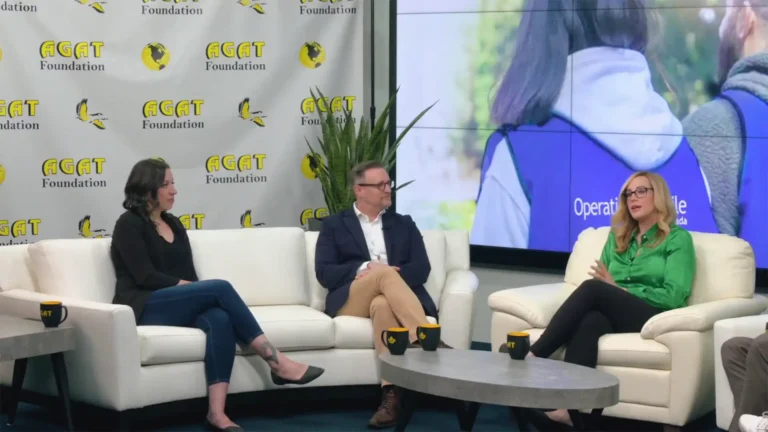
To learn more on breast cancer surgeries in Alberta and how technology is improving procedures, watch the full talk with Dr. Kanashiro, conducted and recorded at AGAT Laboratories in Calgary.
Discover how AGAT Foundation’s support brought Magseed® technology to Alberta, improving patient comfort and transforming breast cancer surgery.

 English
  Français